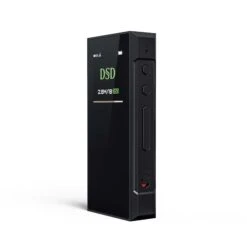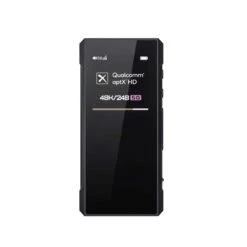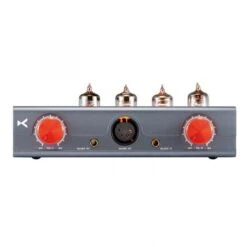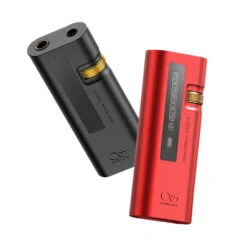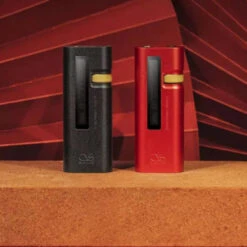
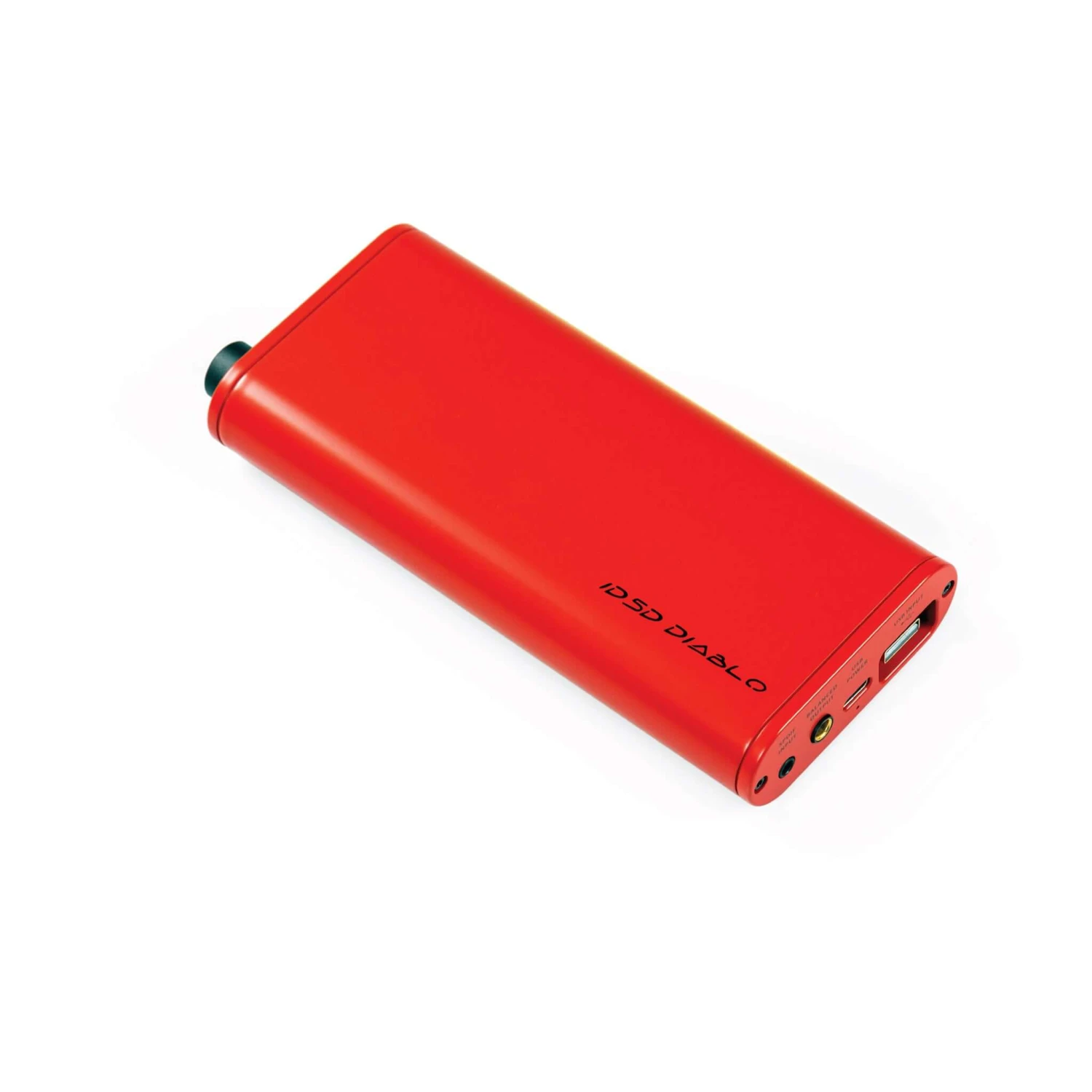
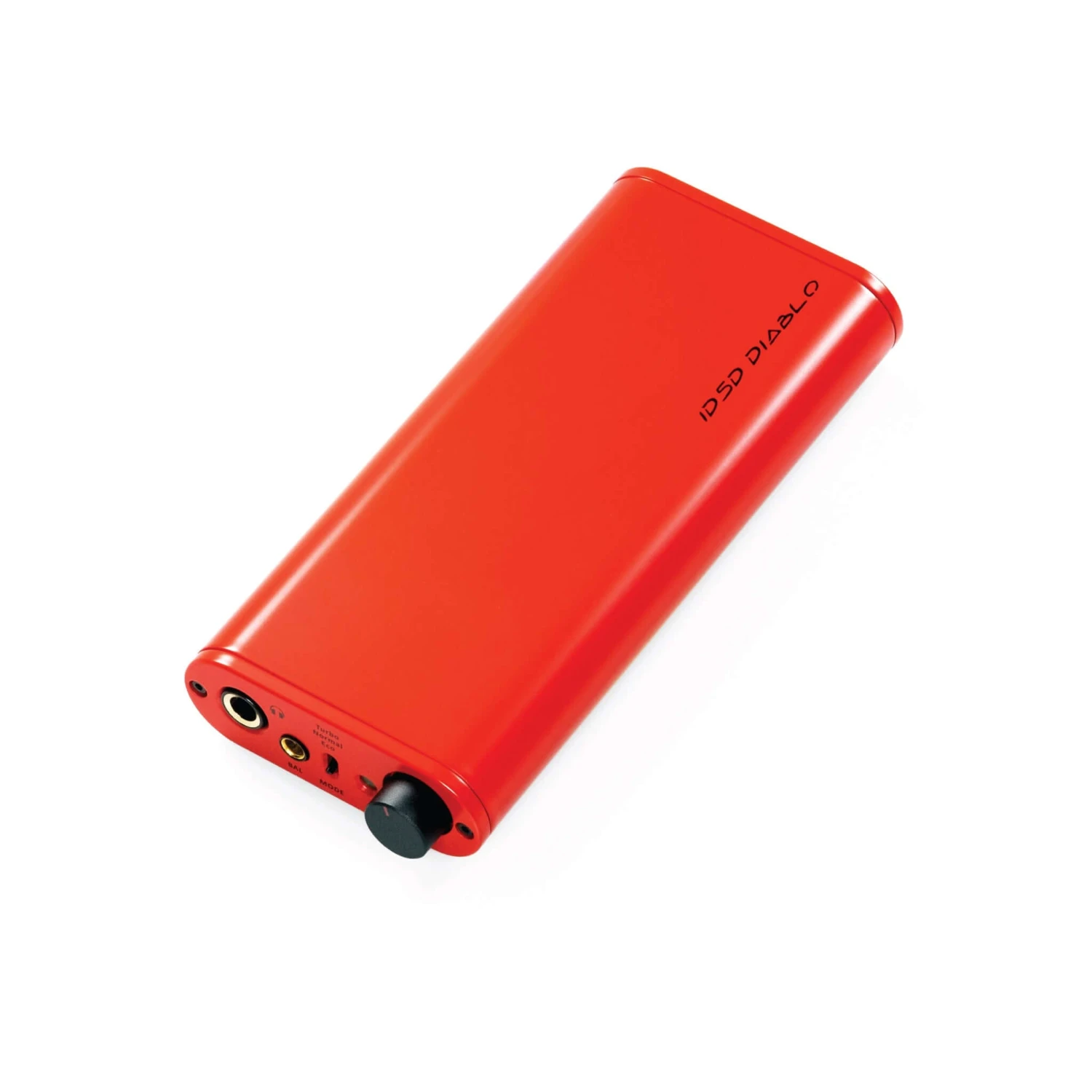
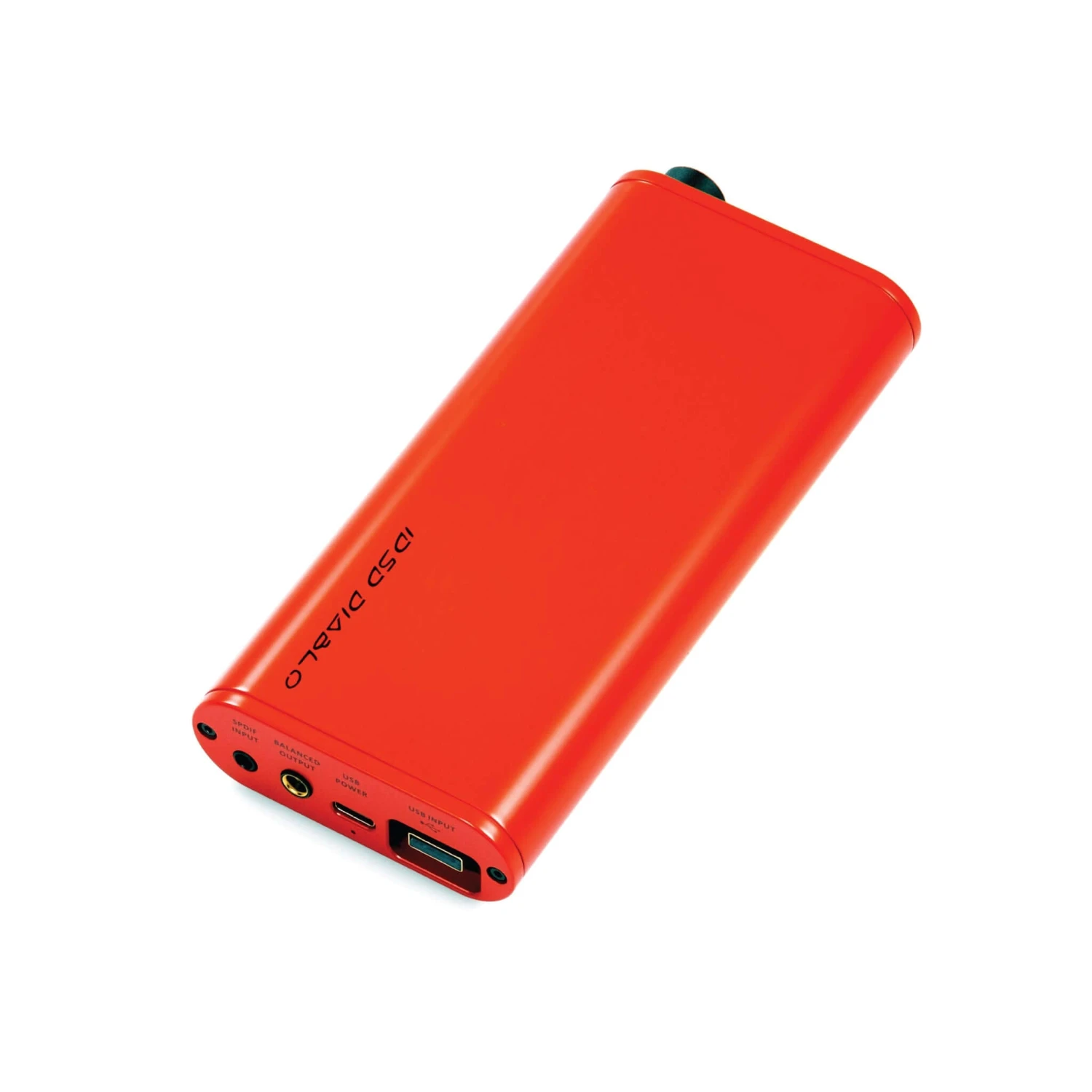
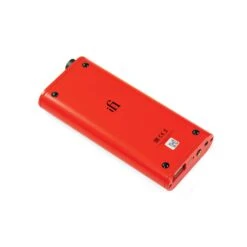
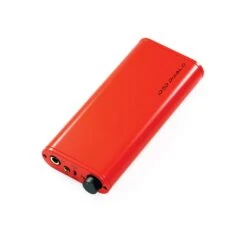
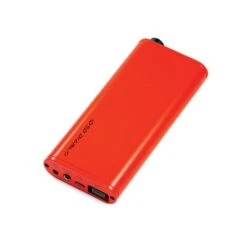

- ✅ HIGH RESOLUTION – Dual Core Burr Brown True Native chipset supports all hi-res audio formats up to PCM 32 bit / 768kHz, DSD512, and MQA (decoder)
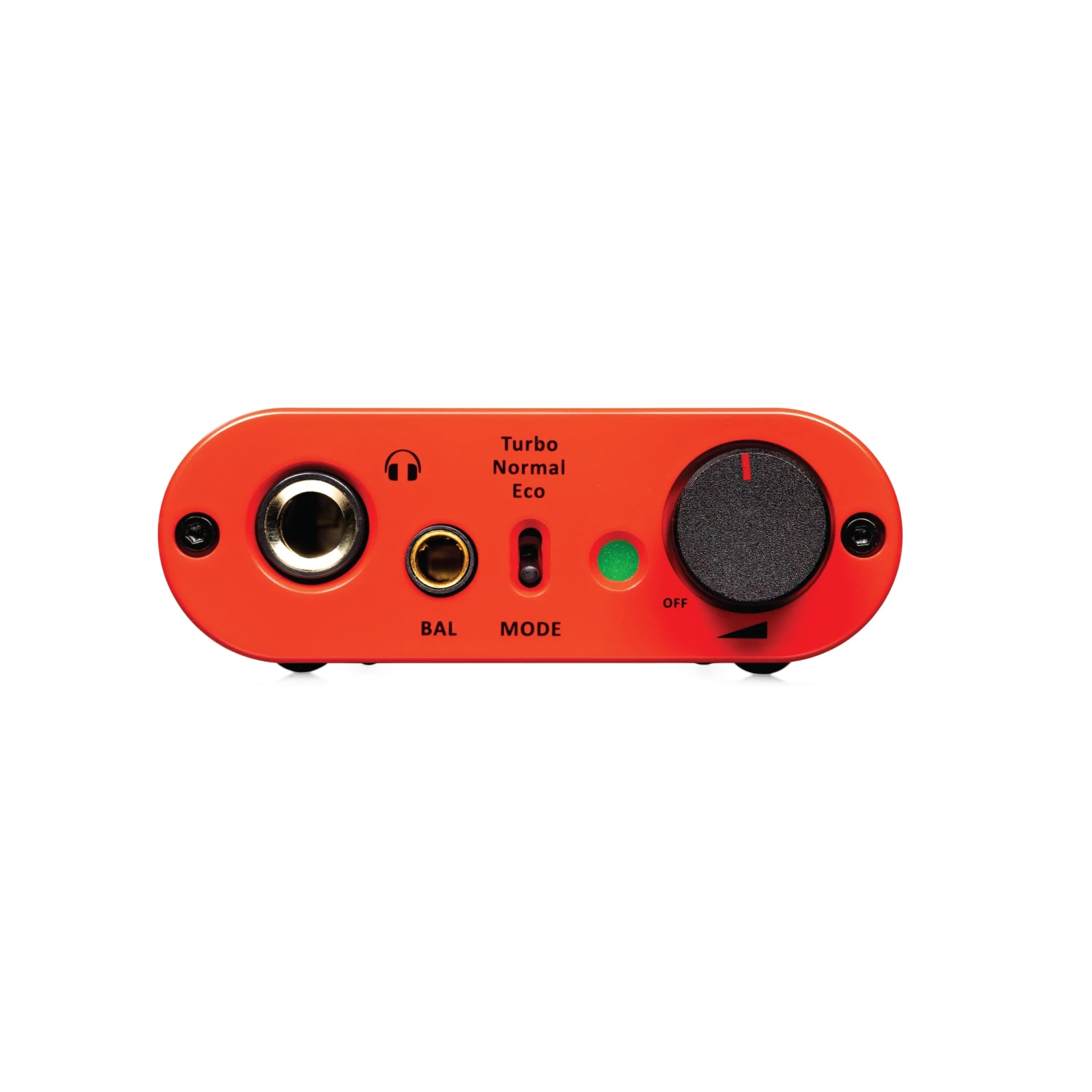
- ✅ POWERFUL AMPLIFIER – Up to 4,100 mW headphone amplifier with balanced topology and 4.4mm output. Easily switch between Turbo (4,100mW) /Normal (785 mW) /Eco (265 mW) modes
- ✅ AMAZING SOUND – Ultra-Low noise, low distortion (0.00006%) OV2028 OpAmp, devil bass reproduction, and unbelievable resolution provide an unbeatable experience
- ✅ PORTABLE – Rechargeable battery provides 6-12 hours of listening, or play while charging
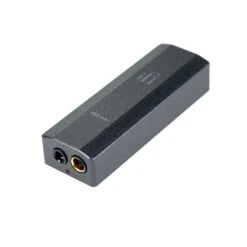
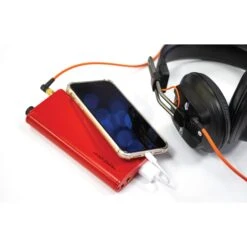
- ✅ CONNECTIONS – USB A, S/PDIF digital and optical audio inputs; 6.3mm and 4.4mm headphone outputs


The Burr-Brown True Native® chipset means file formats remain unchanged or ‘bit-perfect’. This means you are listening to music as the artist intended in the format in which it was recorded.
At iFi we use Burr Brown extensively in our products having selected it for its natural-sounding ‘musicality’ and True Native architecture. Our experience with this IC means we know how to make the most of it.
The XMOS 16-Core chip processes the audio data received via the USB* digital input.
This new low-latency XMOS microcontroller has greatly enhanced processing power. Compared to the current generation of eight-core chips, this new 16-core IC delivers double the clock speed (2000MIPS) and four times the memory (512KB), as well as the latest SuperSpeed USB standard.
iFi’s in-house digital development team has programmed the XMOS firmware to optimise sound quality and ensure a perfect partnership with the Burr-Brown DAC.
(* Also on S/PDIF on the NEO iDSD/Diablo)
MQA is an award-winning audio technology that enables music fans to stream the original master recording into their home, car or on their mobile. In the words of Gilbert O’Sullivan, iconic Irish-born singer-songwriter, “The great thing about MQA is that it delivers the finesse that was there in the desk sound. It’s tremendous, it sounds really good.”
MQA (Master Quality Authenticated) is supported through the USB with full decoding of MQA files up to 384kHz thanks to the processing power of the new 16-core XMOS chip.
Check out how to set up your MQA decoder via Tidal, Roon and Audirvana here.
This means that the full ‘three unfold’ decoding process is performed internally, as opposed to only the final unfold in the manner of an MQA ‘renderer’.
Globally, MQA has become an important consideration for any comprehensively equipped DAC. It is available through for Tidal Masters, Audirvana and Roon.
Balanced, differential analogue circuit design has long been championed for its ability to reduce noise and cross-talk within the signal path by fully separating the left and right channels.
PureWave is a new, balanced, symmetrical dual-mono topology with short, direct signal paths. The name refers to the sonic purity it achieves thanks to exceptional linearity and infinitesimally low levels of noise and distortion.
‘Negative feedback’ is used in amplifier circuits to compare the output signal with the input signal and correct errors, in order to control gain and reduce distortion.
For sound quality, this is positive; BUT commonly applied, one-size-fits-all ‘global negative feedback’ can also highlight different problems at the same time as solving others – corruption of the error signal, phase shifts, group delay and so on can all have a negative impact on sound quality.
We recognised that different parts of a circuit benefit from specifically optimised feedback loops and have developed a negative feedback system that is much more accurate than the usual approach. This incorporates multiple feedback paths instead of a global loop, each path optimised for a particular function and working synergistically with the others to deliver optimal overall performance.
An important aspect of the circuit design is its direct-coupled nature (no coupling capacitor is present), achieved without a conventionally applied DC servo.
DirectDrive® equals a direct signal path which means less signal degradation. This direct signal path is unequalled in audio and is the reason why the sound is so ‘true’.
Switching between settings has been engineered to ensure sonic transparency with advanced trench technology MOSFET is used as a muting switch.
This FET-based switching is handled by a micro-controller, which only ‘wakes up’ when the user changes a setting, thus eradicating any sonically deleterious interference.
TDK C0G (Class 1 ceramic) capacitors offer high stability and low losses for resonant circuit applications.
Getting ever closer to the theoretical ideal of pure, frequency-constant capacitance, these capacitors reduce capacitor-induced distortion to vanishingly low levels.
They are pricey but are a perfect addition to our products.
Panasonic OS-CON caps totaling 5,410uF give very-low Equivalent Series Resistance (ESR), excellent noise reduction capability and frequency response characteristics. In addition, OS-CONs have a long-life span and its ESR changes little even at low temperatures since the electrolyte is solid.
They are not often found in products costing <US$1000.
Vishay MELF resistors – complex, costly but superior.
These metal electrode leadless face resistors have excellent accuracy, stability, reliability, and pulse load capability. They provide optimal power rating and pulse load capability. They show some of the lowest noise and distortion of any resistor available in the market, period.


Reviews
There are no reviews yet.